
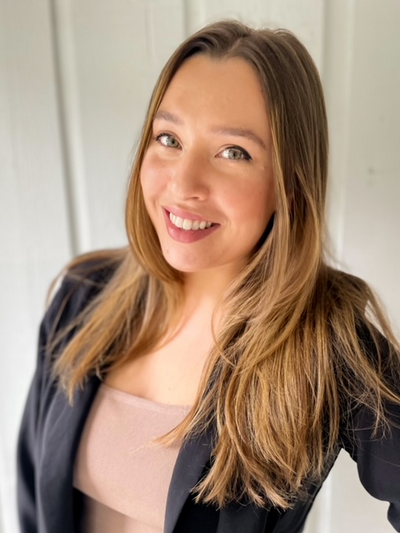
Spotlight On: Lily Angel, Entrepreneur and Owner of K|LA | Paying it Forward
K|LA Boutique is a women’s clothing and accessories franchise company looking to empower women to own and operate their own clothing boutique. We do this by empowering women to be the best version of themselves through fashion. Because when you look good, you feel good; and when you feel good, you can conquer the world. We have a fabulous selection of thoughtfully chosen, high quality (yet affordable), fashionable styles. We strive to create an inclusive welcoming space where every customer feels valued and confident.
Through a lifelong love of fashion, I always felt passionate about styling outfits and helping people put items together in a way that made them feel beautiful and confident. It was a childhood dream to have my own store, but as an immigrant it felt a little out of reach for me. However, after managing the K|LA stores in Charlotte for 7 years, I was given the opportunity to purchase the business. The previous owners believed in me so much that despite their attorney’s advice, they offered to finance me for the first 3 years. This was a huge opportunity for me and helped launch the brand into what it is today. I’ve since paid them back, but it left me with a need to pay it forward.
I’m now reaching my fifth year as a profitable business owner and I have learned so many lessons, both good and bad. I’ve been fortunate enough to have had many great bosses and mentors in my life. It would be an honor if I could pass on my knowledge to someone that is looking to pursue a similar path. For this reason I chose to turn the small business that I own into a franchise company.
When deciding to scale my business, it made perfect sense to join a program that can help me accomplish my goals. I was very lucky to be one of the Scale Up CLT scholarship recipients for 2023. I’ve only been in the program for three months and it’s already made a huge difference. I’ve been told that with each meeting or event, you can always walk away with a single nugget that gives you a new idea, or confirms an existing idea, that you can pursue. In my short time here, I've already experienced this. Before I joined, I knew I wanted a franchise model but the traditional model didn’t feel like the right fit. A fellow scholarship recipient brought a different franchise model to my attention that inspired me to come up with a new concept. The problem is that finding financing is not easy for someone with zero assets and a decent credit score, regardless of how hard they work and how talented they are. With this nugget I received at one of my EOA meetings, I’ll be able to give each franchisee the opportunity to join us with minimal investment and maximum support. This way, they will not have to take out a large six figure loan, and will be able to see a profit sooner. I look forward to seeing where this road takes me.

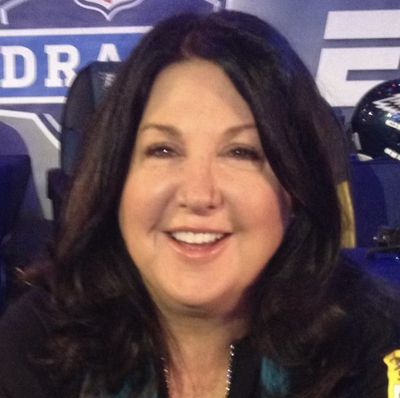
Spotlight On: Anne Pipkin, Entrepreneur and Founder of Gorgeous Glo
We are Gorgeous Glo, Charlotte’s premier beauty, blowout, and custom spray tan boutique. We provide skin-nourishing organic tans year round with zero exposure to UVA or UVB rays. We provide an exceptional level of attention to detail in all of our beauty services, and have grown our client base from zero customers to more than 26,000 since we opened in 2010.
We actively partner with Levine Cancer Institute and others organizations to promote skin safe practices all year long. We provide a venue for LCI’s free community head and neck screenings (the initial stages in the diagnosis of melanoma) at our annual women’s empowerment forum.
Thanks to Gorgeous Glo, we hope the community will be more aware of the dangers of melanoma, and the ease with which it can be prevented. We aim to help others feel their “Gg” best, a beauty that is so much more than skin deep.
Our owner Anne Pipkin was inspired to provide her community with a safe alternative to tanning after her father passed away from melanoma in 2000. A month after her father’s death, her sister was diagnosed with melanoma; early diagnosis due to education was the key to saving her sister’s life.
If one was to map the challenges our business has encountered along the way, it would look like a topographical one with many peaks and valleys. We have been able to move the needle in our own community in terms of awareness, and for that we’re grateful. We were unable to move the needle at all in our former Charleston, South Carolina, location, and the acceptance of that has been trying emotionally.
Navigating through COVID was our greatest challenge by far. We were forced by our state board to close our establishments completely for several months, and the impact was profound.
Staffing has been an issue ever since we’ve reopened. Our pre-COVID staff was absolutely incredible for returning to work when and how they did. Each one of our staff members made a selfless decision to keep our business going, considering the fact that they could have made more money by continuing to stay out of work and to file for unemployment.
We owe everything to our staff, we always have, and we always will. Even in 2021 when our salon was inundated with appointments after we reopened, they were patient and kind with a backlog of clients who had not received services in months. Their diligence to keep our salon immaculately clean was key to the successful ramping back up of our business.
Having a mission to leave our community a better place was a major driving force. We are also blessed with an incredibly low turnover rate, and staff who are deeply committed and view Gorgeous Glo as a collective, rather than one owner’s personal business. Our immensely loyal customers were grateful for our return as pandemic restrictions eased and our business recovered completely from a more than 70% drop in total revenues in 2020.
We do everything we can to make sure our staff know they are listened to and appreciated. We allow our employees to customize their services they offer, depending upon what they want to do, rather than a set list for every employee.
The ultimate goal is that our staff knows this is OUR business, not just Anne’s.
Our staffing strategies now include:
- Full respect for a staff that is client-facing every day,
- Accommodation of individualized staff-elected services,
- Business hour changes made to accommodate the staff-driven schedules, and
- The addition of PTO, which was a new part of the staff benefit package.
We have already noticed an incremental increase in services after the past several weeks’ participation in Scale Up CLT. The program provided the push we needed to explore our website data and back-end statistics from our POS system. We've now been able to begin pursuing a variety of what we’ve come to call “low hanging fruit” revenue opportunities.
This program has helped us to be more inclusive of all high-level initiatives with our staff, and their input as “boots on the ground” has been invaluable. This is the most motivated and engaged we have ever been, and we believe the future is incredibly bright.
It is exceptionally difficult for an owner/operator to consciously take time from their already jam-packed day to completely analyze their financials, and address their business fundamentals. The Scale Up CLT program has forced us to slow down, and create a research-based recipe for success for our particular business arena. The roadmap we have created from the program’s initiatives has reinvigorated our business goals. We can see the changes we have implemented and they are already making a difference in our business model.
Since we opened in 2010, our client list has grown to more than 26,000 names, and we don’t simply email those clients with spray tan or blowout discounts. We use our collective media accounts for good, and to provide the community with life-bettering information.
Throughout the year, we provide our clients (and any guests at events we attend) ample information about skin cancer research and education. It is our belief that by educating the community on skin safe practices, we can reduce the number of melanoma instances. Each May, in honor of Melanoma Awareness Month, we donate a percentage of our overall profit to the Levine Cancer Institute. In 2020, we established a charitable arm of Gorgeous Glo, elimin8, through which we donate to a variety of causes.
In addition to our melanoma education outreach, we are deep believers in supporting women. As a breast cancer survivor herself, our owner Anne Pipkin found that patients during radiation therapy would benefit from a complimentary beauty treat. In particular, we provide free blowouts for mammosite radiation patients.
We host a variety of annual events supporting women entrepreneurs. Each fall, we donate our SouthPark salon’s space to showcase a panel of local woman entrepreneurs. We highlight women from a wide array of backgrounds and industries, and this year we have branded the event “Women Who Wow”. We anticipate a wonderful turnout on October 17th.
The encouragement and support Gorgeous Glo owner Anne Pipkin has received in Charlotte drives her to pay it forward on a daily basis. If asked for advice by an aspiring entrepreneur, Anne would encourage networking and the education of your network as much as possible, particularly in the early years of your business. This pays dividends over time, and your network will support you in ways you never imagined.
Ultimately, Scale Up CLT has helped us to gather Gorgeous Glo’s loose ends… and now we are able to create a cohesive and easily followable roadmap. We had “split ends” and we are now well on our way to a beautiful, smooth blowout!
Pardon the pun, occupational hazard in the hair industry.
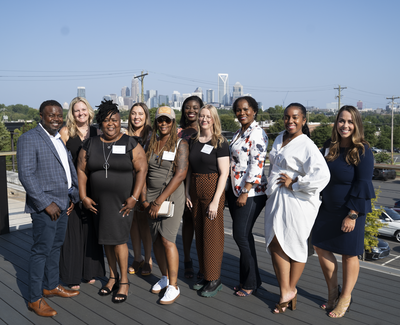
Meet the Next Class of Entrepreneurs Ready To ‘Scale Up’ Business to $1M
The CLT Alliance Foundation is excited to announce the 2023-2024 class of Scale Up CLT. This year’s class is comprised of 21 diverse entrepreneurs across the Charlotte Region.
Scale Up CLT is a partnership between the CLT Alliance Foundation, EO Accelerator, and the City of Charlotte providing coaching and support to diverse and female entrepreneurs interested in growing their businesses to $1 million plus in revenue. Participants of Scale Up CLT receive a scholarship of up to $10,000, which includes partial payment of the EO Accelerator program $2,500 first-year dues, and access to CLT Alliance Ally-level investor benefits for a year. As Ally-level investors, participants will receive invitations to the CLT Alliance Investor Quarterly Meetings, Regional Insight Forums, and a chance to attend the CLT Alliance’s fall planning Leadership Retreat and/or Exploring Economies in the spring.
Hosted by Wray Ward, the new class met the CLT Alliance Foundation Board, along with other prominent members of the Charlotte entrepreneurial community. Participants were also graced with the likes of local entrepreneur Byron “Chef B” Hailey, who provided a menu specially curated for the event.
“The new participants of Scale Up CLT are a testament to the boundless potential and vibrant diversity within the entrepreneurial landscape of the Charlotte Region,” CLT Alliance Foundation Program Manager Jonathan Evans said. “As they embark on this transformative journey, they not only embrace innovation but also redefine the future of business. We are excited to help them grow as business owners and see their growth as future business leaders.”
Feedback from class is already very positive.
“Receiving this scholarship is truly an honor. I am deeply thankful for the opportunity to scale up our business to the next level in order to contribute to Charlotte's undeniable growth and success.”, participant Amir Tehranchian said. “We are excited to be working alongside Charlotte’s own incredible business leaders to make strides towards providing even better experiences and services for our diverse clientele and contributing to the culture and betterment of the Charlotte community.”
Members of this year’s class include Sharon Allen of H&S Therapeutic Services; Lily Angel of K-La Boutique; Morgan Best of M.L. Best Consulting; Alaa Bou Ghanem of Architect Builder Group PLLC; Tameka Brewington of Real Talk Counseling; Tamu Curtis of The Cocktailery; Chris Davis of Buff Beauty Academy; Khalid Davis of Khalid Davis Electric; Tammy Foster-Knight of Optional Solutions, LLC; Samir Hamid of F4mily Matters; Kenny Hill Jr. of Carolina Repair Services Inc; Amy Johnson of Strata Project Management Group, LLC; Raymond Jordan of Spikes Out Tree Care; Venus Kennedy of Charlotte Women's Counseling; Yacara Mungo-Dozier of Enlighten Legacy Learning Centers LLC; Abi Olukeye of Smart Girls HQ; Anne Pipkin of Gorgeous Glo; Kim Rosas of Period.Shop; Tamar Slay of Slay Basketball; Amir Tehranchian of The Revel Room; and Julian Tingle of Community Advancement Agency LLC.
To provide a scholarship or learn more about how to be selected for a scholarship, please contact Jonathan Evans jevans@charlotteregion.com.
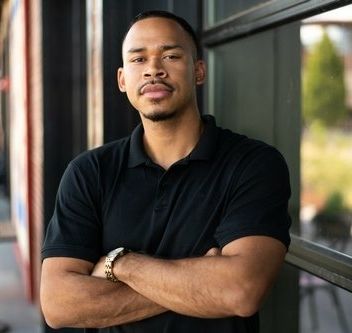
The Art of Entrepreneurship | Khaleel Loyd's Story of Creativity and Success
Creativity and entrepreneurship go hand in hand. Khaleel Loyd, the co-founder of Loyd Visuals, is a perfect example of how combining these two elements can lead to remarkable success. With a passion for authentic storytelling and a drive to create meaningful visual experiences, Loyd Visuals has experienced significant revenue and team size growth since joining Cohort 3 of Scale Up CLT in 2021.
Khaleel attributes this remarkable growth to various factors, including the invaluable information provided through the Scale Up CLT and Entrepreneurs’ Organization Accelerator (EOA) programs. Scale Up CLT is a collaborative scholarship program designed to accelerate the growth and success of minority-owned businesses in the Charlotte Region. In partnership with the CLT Alliance Foundation, Entrepreneurs' Organization (EO) Charlotte, and the City of Charlotte, this one-of-a-kind opportunity offers financial scholarships to qualifying businesses to participate in a comprehensive program that helps build social capital and business acumen.
These programs have equipped Loyd Visuals with the knowledge and resources needed to navigate the entrepreneurial landscape in Charlotte. Additionally, access to social capital has played a pivotal role in their success, allowing them to forge partnerships with organizations such as CRVA, Leading on Opportunity, Honeywell, the LA Rams, and more.
As Khaleel reflects on Loyd Visuals' success, he acknowledges the pivotal role of Scale Up CLT and the CLT Alliance Foundation.
"The Scale Up program has been instrumental in our growth. It has provided us with the tools and guidance to scale our business effectively and seize opportunities in the market," he said. "The support we have received from the CLT Alliance Foundation has been invaluable. It has opened doors for us and allowed us to connect with influential partners and clients who have contributed to our success."
People, Processes, and Systems
In 2022, Loyd Visuals achieved remarkable success by prioritizing three crucial aspects: people, processes, and systems. Recognizing the importance of their team, Loyd Visuals invested in training and development opportunities, fostering a positive and supportive work environment that nurtures creativity and collaboration. Additionally, the company implemented new processes and systems to enhance efficiency and productivity. In just a short time, Loyd Visuals has expanded its team from five members to an impressive 12, and they continue to hire talented individuals who share their vision. This growth is a testament to their dedication and the impact of the Scale Up CLT program in nurturing and supporting their entrepreneurial journey. By focusing on these critical areas, Loyd Visuals has built a solid foundation for continued growth and success in 2023.
A Clear Vision for the Future
Loyd Visuals is poised for continued expansion and influence in the coming years. With a talented team in place, a robust infrastructure, and a clear vision for the future, Khaleel is confident in the company's ability to scale and make a lasting impact. Loyd Visuals aims to create a world that embraces and celebrates authentic storytelling while providing more opportunities for creatives in Charlotte and beyond.
Final Thoughts
Khaleel’s remarkable journey with Loyd Visuals exemplifies the transformative power of the Scale Up CLT program. Through the support and resources provided by the CLT Alliance Foundation, Loyd Visuals experienced significant growth in revenue and team size in a relatively short period. This success story is just one example of how the investment made by the CLT Alliance Foundation in Scale Up CLT and its entrepreneurs is making a lasting impact on the inclusivity and vibrancy of our region.
By empowering minority-owned businesses like Loyd Visuals, Scale Up CLT fosters a more inclusive and diverse entrepreneurial landscape in the Charlotte Region. The program provides financial support, invaluable mentorship, networking opportunities, and access to expert guidance. Through these initiatives, the CLT Alliance Foundation facilitates an environment where entrepreneurs can thrive, regardless of background or circumstances.
Scale Up CLT Entrepreneurs Surpass $1 Million Revenue Milestone
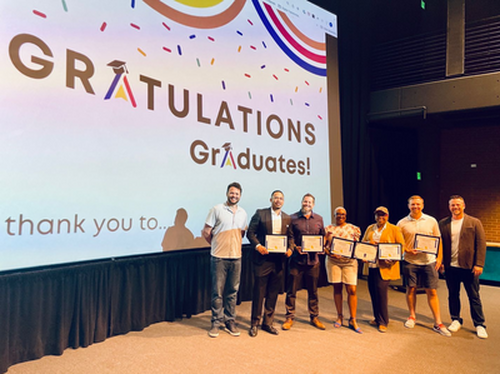
The CLT Alliance Foundation is excited to celebrate Scale Up CLT participants Khaleel Lloyd, Saichelle McNeill, Tiffani Sims, Christina Lee, Yvette Hall, and Jessyca Shuttleworth, a group of remarkable entrepreneurs from the Charlotte Region who have recently graduated from the Entrepreneurs' Organization Accelerator (EOA) program, surpassing the $1 million revenue milestone.
EOA is an innovative program that helps aspiring entrepreneurs develop their strategy, finance, people, sales, and marketing skills through a series of high-impact learning events and small group accountability sessions. Entrepreneurs graduate from the program once their businesses reach $1 million in revenue.
“Their accomplishments serve as a testament to their hard work and determination,” Nate Hogan, president of the CLT Alliance Foundation, said. “They continue to impress us with their ability to scale their businesses and positively impact our vibrant region.”
The graduates are also alumni of Scale Up CLT, a collaborative program offered in partnership with the CLT Alliance Foundation, Entrepreneurs' Organization (EO) Charlotte, and the City of Charlotte. The program provides support for qualifying minority-owned businesses in the Charlotte Region to grow and succeed through coaching, networking, and education.
“Since joining the Scale Up CLT program in 2021, Loyd Visuals has experienced significant growth in both revenue and team size,” Khaleel Loyd, CEO and executive producer at Loyd Visuals, said. “This growth was driven by a number of factors, including the information provided through the Scale Up CLT/EOA program, the access to social capital, closing of deals with CRVA, Leading on Opportunity, Honeywell, the LA Rams and others.”
“I would like to thank EO Accelerator and the CLT Alliance for playing a critical role in helping my business partner and I scale our company from $350,000 in revenue to over $1 million within two years,” Christina Lee, CEO of Paradigm 360 Coach Training, said. “Now I think bolder, wiser, and bigger as a business owner and there is no ceiling above me when it comes to scaling my organization.”
“As a participant of Scale Up CLT and the EO Accelerator, I have gained so much knowledge about entrepreneurism in Charlotte,” Saichelle McNeil, owner of The Washroom Laundry Service, said. “More importantly, I’ve learned about the connection between small business and its importance to the city. As a Scale Up CLT participant, I got a warm introduction to city government. Having access to the Charlotte Regional Business Alliance® team and their investors was extremely beneficial.”
Several EOA participants received additional recognition:
- Sharon Jones, Scale Up CLT’s Cohort 4 member, received the Thirst for Learning Award.
- Saichelle McNeil, Scale Up CLT’s Cohort 2 member, received the Together We Grow Award.
- Tiffani Sims, Scale Up CLT’s Cohort 3 member, received the Think Big, Be Bold Award.
Jones and Katheryn Hermida from Cohort 4 also joined the 2023-2024 EOA Board of Directors.
“The accomplishments of Scale Up CLT alums highlight the potential of the entrepreneurial landscape in the Charlotte Region,” Hogan said. “We applaud their hard work, determination, and dedication to their businesses.”
Scale Up CLT is a one-of-a-kind transformative program that brings together the collaborative efforts of the CLT Alliance Foundation, EO Charlotte, and the City of Charlotte. It serves qualifying minority-owned businesses in the Charlotte Region with annual revenue between $250,000 and $999,999. This program is designed to empower entrepreneurs and foster their growth. Scale Up CLT offers scholarships worth more than $10,000, which include benefits like EO business accelerator, CLT Alliance Ally-Level investor benefits, expert coaches and mentors, social capital opportunities, and peer-to-peer learning. This unique approach fuels the potential of minority-owned businesses, helping them achieve their entrepreneurial dreams while contributing to a more inclusive business environment for all.
Scale Up in the Spotlight | Meet Yazan Alhakim, Owner of FASTSIGNS® of Charlotte, NC - Independence Blvd
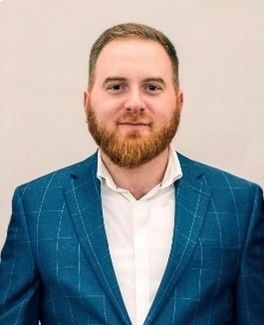
I am Yazan Alhakim, owner of FASTSIGNS on Independence, an individually owned and operated signage company that helps businesses tell their stories visually.
At FASTSIGNS, we believe in helping you make your statement. From signs and graphics to printing and promotional products, we offer innovative solutions to help our clients stand out. Whether it's a one-man operation or a multinational corporation, we work with all sizes of businesses.
Our services help businesses:
- Create an inspiring work environment
- Uniquely engage customers
- Ensure safety and compliance
- Promote new ideas and services
- Stand out from competitors with superior branding
- Navigate facilities with ease
Our team is comprised of experienced professionals with a deep understanding of the impact of signs and graphics on your business. We take the time to understand your priorities and work with you to bring your project to life, on time and within budget.
As a community-driven business, I am committed to giving back. I serve on the leadership board of the National Small Business Association (NSBA), the UNC Charlotte Belk College of Business Alumni board, and the board of the Muslim Education Center (MEC), a non-profit offering a food program and free health clinic.
FASTSIGNS is also a proud member of various trade groups such as the Greater Charlotte Apartment Association (GCAA), Charlotte Hospitality Tourism Alliance (HTA), Charlotte Regional Visitors Authority (CRVA), Latin American Chamber of Commerce Charlotte (LACCC), Charlotte Regional Business Alliance® and EOA Charlotte.
I started FASTSIGNS with the vision of helping entrepreneurs position their businesses for success through superior branding and graphics. If you're looking to enhance your business image, visit our website (www.fastsigns.com/67) or email us at (67@fastsigns.com) to learn more.
Scale Up in the Spotlight | Kim Brattain
It’s counter-intuitive. When you narrow your focus through a camera lens, your universe actually expands. Narrowing down one’s field of vision can provide clarity and focus. And if you use that hyper-focus correctly, you can steer emotion, create a breathtaking visual story, sell a thought, promote a service, even make somebody want to buy a widget.
That thrill of looking through a lens is the value-add at Kim Brattain Media, our full-service video production house. We create everything from corporate commercials, training, and branding films, to nonprofit fundraising films, to documentaries. We approach each project with a fresh eye and perspective, looking through that lens for a unique edge that allows our clients to standout and shine.
Our core values: Integrity, Satisfaction, Creativity and Respect guide our interactions with our clients and with each other. As the CEO of this company, I believe those values enable our team to lift each other up, always expect the very best from each other, and continually strive for new and better ways to make our work superlative.
Our clients range from large international corporations like Continental Tire to mid-size businesses like Greer-Walker to nonprofits like The Relatives and Teen Health Connection.
A lot of times, the difference between a really great video and a so-so one is not apparent on the surface. People are fantastically perceptive when they see quality. But they can’t tell you why a video is better. My secret: It’s recognizing the visual story as a separate entity. When those visuals, that look through the lens, meshes seamlessly with the spoken or music track, you have well, what we like to boast as a ‘work of art.’
Our team of directors, videographers, editors and producers is getting national recognition. Just this year, we won two Gold Telly awards for Public Relations and Charitable Films, four Muse awards and six other national Tellys, for work as diverse as Documentary to Corporate Branding to Social Impact.
Personally, I am thrilled to be part of the Scale Up program at the Charlotte Regional Business Alliance®. We’ve produced videos for the organization for years, and I know firsthand the impact this group of hard working, insightful people have on our region. Look at the growth! Being an entrepreneur is the most challenging thing I’ve done in my life. There’s no blueprint. The CLT Alliance emphasis on business plans and budgets and marketing is absolute heaven. Plus, we’re thinking we’ll run into a few folks that need great video!